Residue needs product, not pressure
Hairspray and product film need an appropriate cleaner and a little dwell time. Dry wiping a coated surface spreads the residue and leaves a haze that looks worse than the buildup did.
Serving Burnsville, Minnesota & surrounding areas
Mon–Fri 8am–6pm · Sat 9am–2pm

Services
Commercial Cleaning Services Janitorial Services Industrial Cleaning Services Floor Care Services Deep Cleaning Services Post-Construction Cleaning Services Window Cleaning Services Carpet Cleaning House Cleaning ServicesIndustries
Restaurant Cleaning Office Cleaning Medical Facility Cleaning Retail & Shopping Center Cleaning School & Daycare Cleaning Financial Institution Cleaning Auto Dealership Cleaning Salon & Spa Cleaning Fitness Center & Gym CleaningAreas Served
Bloomington Lakeville Eagan Eden Prairie Apple Valley Edina ContactCleaning for styling floors, treatment rooms, shampoo stations, and restrooms, scheduled around your appointment book with product residue treated as the main problem.
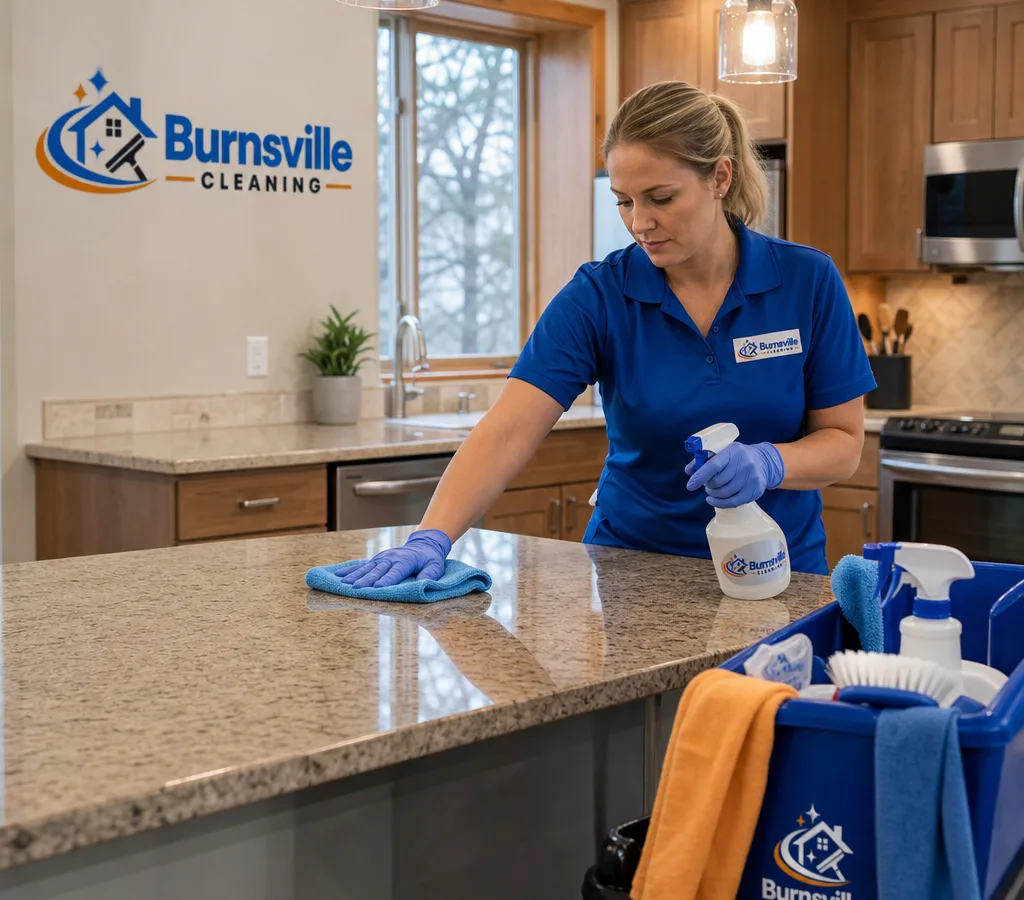
A salon does not accumulate dust so much as a film. Hairspray, dry shampoo, setting products and powder drift settle on every surface within range of a styling chair, and they are sticky rather than loose. Wiping a coated mirror frame or a shelf edge with a dry cloth moves the residue around instead of lifting it, which is why surfaces can look worse after a quick pass than before.
Burnsville Cleaning scopes salons and spas around residue and hair rather than general tidiness. Hair reaches places that surprise people: under the base of styling chairs, into floor vents, along the plinth of the shampoo units, and into the corner behind the reception desk. It needs deliberate attention rather than a broom across the open floor.
Work is scheduled around your appointment book, which usually means after your last client or before your first. We clean the space and its surfaces. Sanitizing and disinfecting tools, implements, combs, shears and anything governed by your board's rules stays with your licensed staff under your own protocols, and we make no sanitation or licensing compliance claims.
A salon scope is organized by station, because that is how the space is used and where residue concentrates.
A typical salon or spa scope covers:
Outside scope: sanitizing or disinfecting tools, implements and anything your state board governs, which stays with your licensed staff. Salons often add floor care for hard floors that have gone dull and a periodic deep clean to reset built-up residue.
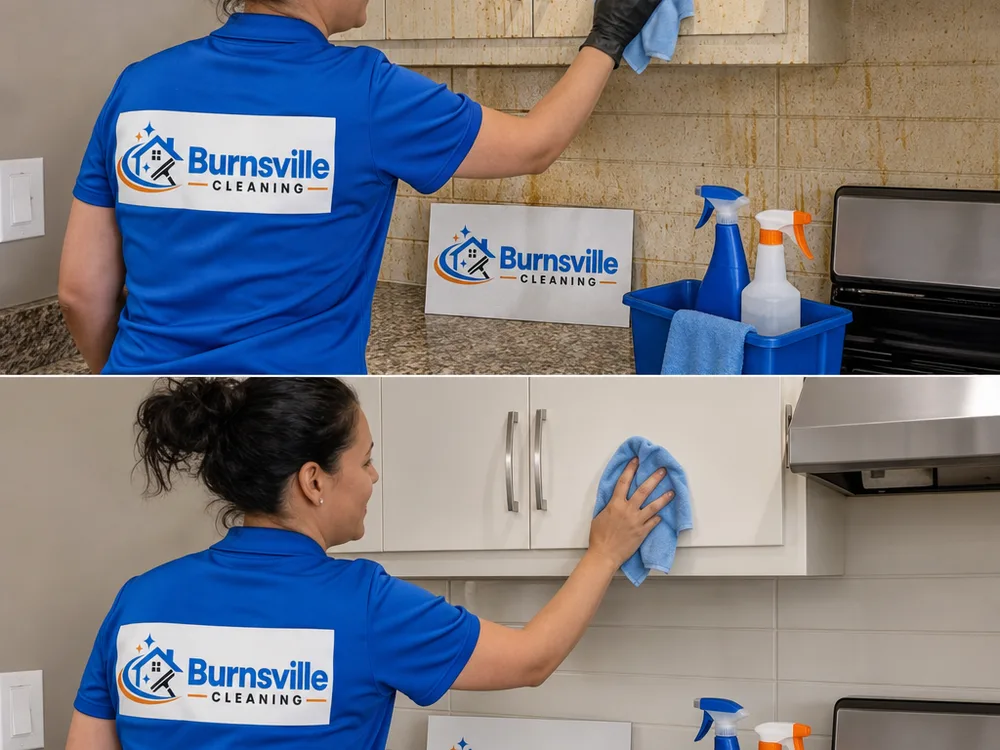
Hairspray and product film need an appropriate cleaner and a little dwell time. Dry wiping a coated surface spreads the residue and leaves a haze that looks worse than the buildup did.
Hair works into floor vents, under chair bases, along plinths, and into corners well away from the styling floor. It needs deliberate attention rather than a pass across open floor.
A client sits facing a mirror for forty-five minutes at close range. Every streak on the glass and every dulled spot on the frame is examined whether they mean to or not.
Shampoo stations stay damp, which means surrounding surfaces, the floor and wall splash zones need attention that a dry styling area does not.
Product film settles on retail packaging and shelf edges and makes new stock look old, which quietly costs you retail sales you never knew you lost.
The base and footrest of a styling chair collect hair, product and scuffs, and almost every inherited cleaning plan we see leaves them off the list.
We walk the salon when no clients are in, note station count, floor type, where residue concentrates, and which rooms need special handling or exclusion.
You get tasks by station and frequency, with an explicit note that tool and implement sanitizing stays with your licensed staff under your own protocols.
If product film has built up over months, a reset pass clears it so the recurring route maintains a clean baseline rather than working against accumulated residue.
The crew works after your last client or before your first, following the agreed route station by station using appropriate products for coated surfaces.
Adding treatment rooms, changing your service mix, or taking on more stylists all change the work, so we revisit the scope rather than running an outdated plan.
Salon and spa cleaning in Burnsville commonly runs about $300 to $1,600 per month. A salon with six to eight stations cleaned three to five times weekly typically lands near $400 to $1,000 per month, while a larger spa with multiple treatment rooms and more restrooms runs higher.
Cost follows station count, treatment room count, shampoo unit count, floor area and type, restroom count, how many days per week you need, and how much product residue has accumulated. A one-time reset clean before starting recurring service is quoted separately and is usually worth it if the space has been running behind.
If your mirrors haze over within a day and there is hair in places you cannot explain, the plan is treating a salon like an office. Get a walkthrough scoped by station.
Request a CallbackNo. Sanitizing and disinfecting tools, implements, combs, shears, and anything your state board governs stays with your licensed staff under your own protocols, and we make no sanitation or licensing compliance claims. We clean the space and its surfaces: stations, mirrors, counters, floors, shampoo areas, restrooms and reception. That boundary is written into the scope.
Yes, and that is the usual arrangement. We confirm your typical closing time, who locks up, and the access method during the walkthrough. Some salons prefer early morning before the first client instead, which works equally well as long as the window is long enough for the floor to be properly done.
Because it is sticky rather than loose. Hairspray and product film need an appropriate cleaner and a bit of dwell time to release. Dry wiping a coated mirror frame or shelf edge spreads the residue into a haze, which is why a quick pass can leave surfaces looking worse than they did beforehand. The right product and a little patience fixes it.
By putting the specific places in the scope rather than relying on a general floor sweep. Hair works under chair bases, into floor vents, along shampoo unit plinths, and into corners behind reception. Those named locations get checked on the route, which is the only way they get done consistently.
The reachable surfaces, floors and fixtures where your practice authorizes it. Equipment, implements, and anything within your own sanitation protocol stays with your staff. Many spas have us handle floors, general surfaces and restocking while keeping all equipment and treatment surfaces in-house, which is a clean split when it is written down.
Often yes, because small salons are where stylists end up doing the cleaning themselves at the end of a long day, and it shows. Even two or three visits a week covering floors, mirrors, shampoo areas and the restroom removes the work nobody wants after a full book. We scope small salons the same way, just at a lower frequency.
Yes, and we usually recommend it when product residue has built up over months. A reset pass clears accumulated film from mirrors, frames, shelving and fixtures so the recurring route maintains a clean baseline instead of permanently fighting buildup. It is quoted separately from the ongoing service.
Tell us your station count, your closing time, and where residue builds up worst. We will walk the salon outside client hours and give you a written scope organized station by station.
Request a Quote
Send the details and we will come out for a walkthrough, then put a written scope and price in front of you.