The surface decides the method
VCT, LVP, concrete, tile, and hardwood need genuinely different chemistry and equipment. Identifying the floor correctly is the whole job, because the wrong method causes permanent damage.
Serving Burnsville, Minnesota & surrounding areas
Mon–Fri 8am–6pm · Sat 9am–2pm

Services
Commercial Cleaning Services Janitorial Services Industrial Cleaning Services Floor Care Services Deep Cleaning Services Post-Construction Cleaning Services Window Cleaning Services Carpet Cleaning House Cleaning ServicesIndustries
Restaurant Cleaning Office Cleaning Medical Facility Cleaning Retail & Shopping Center Cleaning School & Daycare Cleaning Financial Institution Cleaning Auto Dealership Cleaning Salon & Spa Cleaning Fitness Center & Gym CleaningAreas Served
Bloomington Lakeville Eagan Eden Prairie Apple Valley Edina ContactHard floor maintenance and restoration matched to the surface you actually have: VCT, ceramic tile and grout, sealed concrete, luxury vinyl, and finished hardwood.
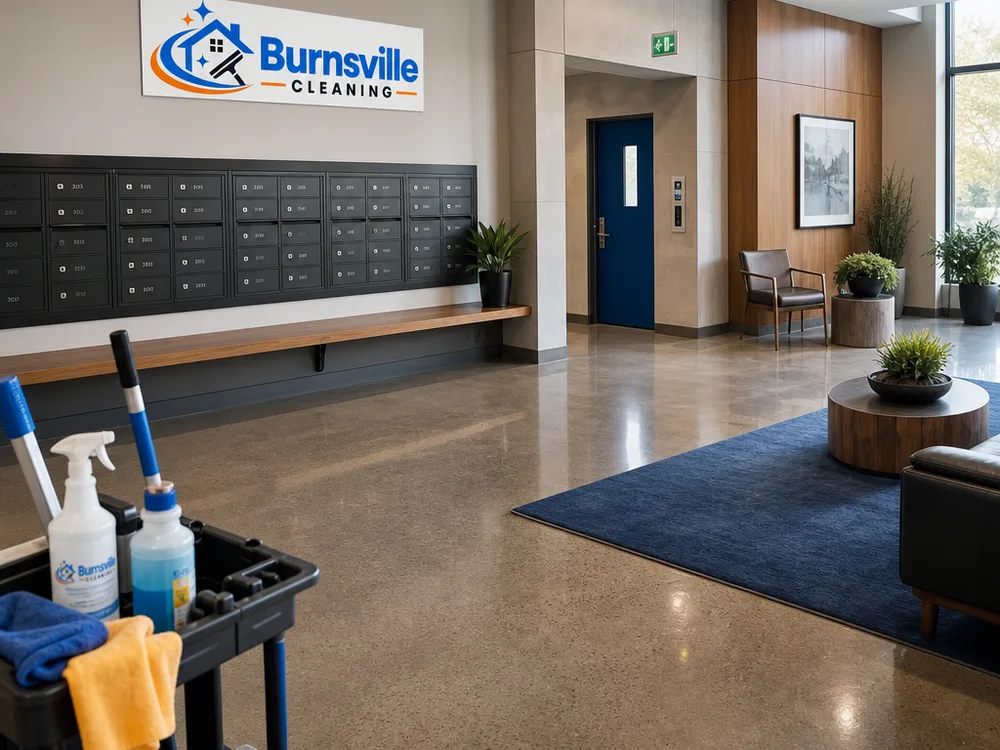
A tired-looking floor is usually a maintenance problem, not a replacement problem. VCT that has gone dull has lost its finish layer, not its usable life. Grout that reads as dark is holding soil, not permanent stain. Concrete that looks blotchy is often unsealed rather than damaged.
Burnsville Cleaning treats hard floor work as surface-specific. The first step is always identifying what you actually have, because the same aggressive stripper that restores VCT will ruin a luxury vinyl plank floor, and a high-pH cleaner used repeatedly on polished concrete will dull it permanently.
Once the surface is known, the work becomes predictable: restore the floor to a reasonable baseline, protect it with the appropriate finish or sealer, then maintain it on a cycle so it never falls back to the state that prompted the call. That last part is what keeps floors out of the replacement budget.
Hard floor work divides into restoration, which brings a neglected floor back, and maintenance, which keeps it there. Most buildings need some of both: a restoration pass to establish the baseline, then a scheduled cycle appropriate to the traffic.
Surfaces and services we handle in the Burnsville area:
If we are not certain what a surface is, we test a small inconspicuous area before committing to a method. Guessing on an unfamiliar floor is how a maintenance visit turns into a replacement quote.
VCT, LVP, concrete, tile, and hardwood need genuinely different chemistry and equipment. Identifying the floor correctly is the whole job, because the wrong method causes permanent damage.
Recoating a worn finish is straightforward. Letting it wear through to the tile means a full strip and rebuild, which costs several times more and takes the area out of service longer.
Clean grout that is left unsealed resoils within months. Sealing after cleaning is what makes the result last, and it is the step most often skipped.
Proper entry matting captures grit before it reaches your floor. Around Burnsville this matters most from November through April, when salt and sand do the real damage.
Most floor chemicals fail because they were over-diluted, under-diluted, or wiped up before they had time to work. Following the product properly is unglamorous and decisive.
A lobby in a busy building may need burnishing monthly while a back office goes a year. Setting one frequency for a whole building wastes money in some areas and neglects others.
We confirm what each floor actually is, check the existing finish or sealer, look for damage that cleaning will not fix, and note moisture or subfloor issues that need addressing first.
On any unfamiliar or delicate surface, we test an inconspicuous area to confirm the method before treating the whole floor. You see the result on your own floor rather than in a brochure.
Stripping and refinishing needs the area closed while coats cure. We schedule around evenings, weekends, or planned closures so your operation is not waiting on drying time.
The restoration visit does the heavy work: strip, deep clean, or degrease as appropriate, then seal and apply finish coats with proper cure time between them.
We agree the ongoing cycle based on real traffic, so routine cleaning, periodic burnishing, and recoating happen on schedule instead of after the floor already looks bad.
Floor care in Burnsville is usually priced per square foot. Strip and wax on VCT commonly runs about $0.40 to $1.10 per square foot, tile and grout deep cleaning with sealing about $0.60 to $1.50, and concrete cleaning or resealing about $0.25 to $0.90. Recurring maintenance such as scheduled burnishing is far cheaper per visit than a full restoration.
What moves the price is the current condition, how many coats of old finish need removing, grout line width and depth of soiling, furniture and fixture moving, access and elevator constraints, and how tight the completion window is. We quote after seeing the floor, because condition matters more than area.
If your floors have gone dull, your grout reads dark, or you are being told to replace a floor that has never been properly maintained, get an assessment first.
Request a CallbackIt depends on how much finish is left. If the finish is worn but intact, burnishing or a scrub and recoat restores the gloss at a fraction of the cost and downtime. A full strip is needed when finish has worn through to the tile in traffic areas, or when so many coats have built up that the floor looks yellow and uneven. We tell you which after seeing the floor, and the cheaper answer is the common one.
For strip and refinish work, plan on the area being out of use overnight. Finish coats need time to cure between applications, and walking on an uncured floor undoes the work. Light foot traffic is usually fine the next morning, while rolling loads and furniture should wait a bit longer. We schedule around evenings, weekends, or closures so the downtime lands where it costs you least.
Almost always, yes. Dark grout is usually loaded with soil rather than permanently stained, and deep cleaning with the right equipment lifts most of it. The important follow-up is sealing, because unsealed grout starts resoiling immediately. Grout that is cracked, missing, or crumbling needs repair rather than cleaning, and we will say so.
No, and this is a common and expensive mistake. LVP has a printed wear layer that traditional stripping chemistry can damage or dull permanently. LVP needs manufacturer-appropriate cleaning instead. Because it looks similar to other resilient flooring, identifying the surface correctly before starting genuinely matters.
Traffic decides it. A busy lobby or entry might need burnishing monthly and recoating once or twice a year, while low-traffic back areas can go much longer. Rather than one building-wide frequency, we set cycles by area so you are not paying for unnecessary visits or neglecting the floors that take the abuse.
Salt and ice melt are the main culprits. Salt crystals are abrasive and scratch finish as they get ground underfoot, and the residue leaves a white haze that ordinary mopping smears rather than removes. Entry matting, frequent mat servicing, and neutralizing salt residue near doors make a substantial difference to how floors look by March.
Light furniture, yes, and we return it once the floor has cured. Heavy items, fixed shelving, and anything with electrical or plumbing connections are noted during the walkthrough so we agree in advance what moves, what stays, and whether your team handles specific items. That way the crew is not improvising on site.
Tell us what surfaces you have and where they are struggling. We will identify the floors properly, test where needed, and give you both a restoration quote and a maintenance cycle that keeps the result.
Request a Quote
Send the details and we will come out for a walkthrough, then put a written scope and price in front of you.