Access windows, not ideal windows
Restaurants rarely hold a long empty stretch, and the ones they hold move with the calendar. A scope written around real access lets a slow Tuesday absorb detail work a Friday cannot carry.
Serving Burnsville, Minnesota & surrounding areas
Mon–Fri 8am–6pm · Sat 9am–2pm

Services
Commercial Cleaning Services Janitorial Services Industrial Cleaning Services Floor Care Services Deep Cleaning Services Post-Construction Cleaning Services Window Cleaning Services Carpet Cleaning House Cleaning ServicesIndustries
Restaurant Cleaning Office Cleaning Medical Facility Cleaning Retail & Shopping Center Cleaning School & Daycare Cleaning Financial Institution Cleaning Auto Dealership Cleaning Salon & Spa Cleaning Fitness Center & Gym CleaningAreas Served
Bloomington Lakeville Eagan Eden Prairie Apple Valley Edina ContactFront-of-house cleaning for dining rooms, entries, and guest restrooms, scheduled around your service periods rather than against them.
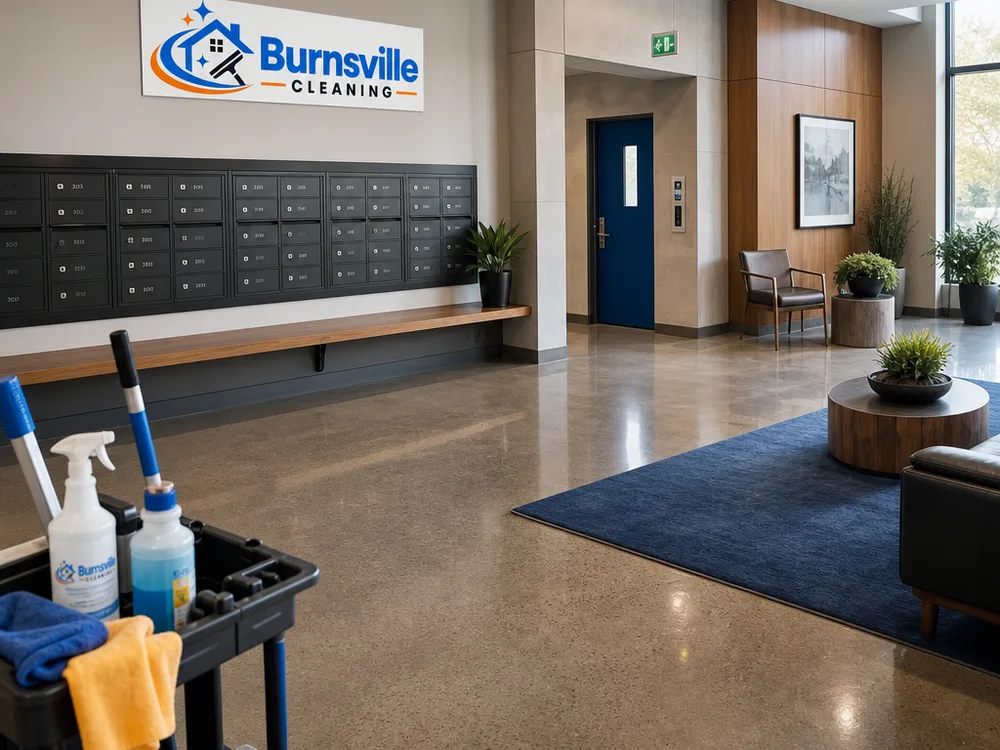
A restaurant keeps its history on visible surfaces. Chair legs scuff the same few inches of baseboard, one booth collects crumbs in the same seam every service, and the front door handle records every hand that has pulled it since open. None of that is a failure of the closing crew. It is what a room looks like after a hundred people have used it, and it needs a pass of its own rather than the spare minutes left while the floor is still turning tables.
Burnsville Cleaning works the guest-facing side of a restaurant: entries, host stations, waiting areas, dining rooms, guest restrooms, and the server and beverage stations that sit outside food preparation. We schedule against the windows your operation actually holds, which in most Burnsville restaurants means after close or during a genuinely quiet weekday stretch.
Kitchens, prep lines, walk-ins, cooking equipment, hoods and grease systems stay outside our scope, and we make no food-safety, health-code or sanitation claims. That boundary is in the written scope rather than left to be discovered later. An operator can plan around a limit that is stated plainly, and hood and grease work belongs with a specialist certified for it.
We write a restaurant scope in the order a guest meets the room, because that ranks the work better than a square-footage list. The door, the mat, the host stand, the nearest chairs, then the room beyond.
A typical front-of-house scope covers:
Most restaurants pair a recurring route with periodic detail work: janitorial services for the nightly routine, floor care for tile and grout that has dulled, and a deep clean to reset a room that has fallen behind.
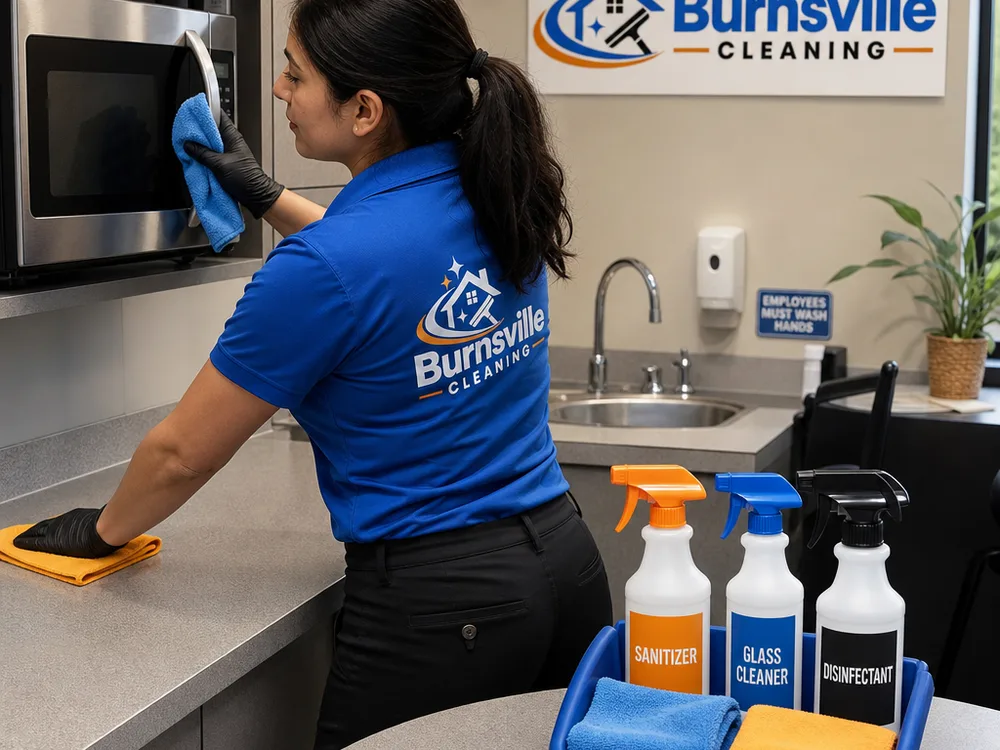
Restaurants rarely hold a long empty stretch, and the ones they hold move with the calendar. A scope written around real access lets a slow Tuesday absorb detail work a Friday cannot carry.
Airborne grease settles on dining-room surfaces well beyond the pass, building a faint tacky film on chair backs, ledges, and light fixtures that ordinary wiping smears rather than removes.
Salt and melt water dry into a grey band across entry tile, and a party of six walks straight over it. Entry matting and frequent mat servicing matter more here than anywhere else in the room.
A restroom on a Saturday service sees more use in four hours than an office one does in a week. Frequency has to be read against your service periods rather than set to a weekly default.
Booth upholstery, banquette seams, and carpeted dining areas hold crumbs and spill residue that a floor pass never reaches. These need a scheduled rotation of their own.
Chairs scuff the same band of baseboard and wall every service. Once it is named in the scope it gets addressed on a rotation instead of being noticed only when it looks bad.
We walk the guest route with you, ideally between services so the room is empty, noting floor types, soft surfaces, problem spots, and where your access genuinely allows work.
You get tasks by area and frequency, plus an explicit statement that kitchens, hoods, and grease systems are excluded, so there is no ambiguity about who handles what.
If the dining room has fallen behind, a first detail pass resets the baseline so the recurring route maintains a reasonable state rather than permanently chasing it.
The crew follows the agreed route in your access window, working the guest sequence in order so the areas a walk-in party registers first are never the ones that got rushed.
Patio season, holiday trade, and winter salt all change the work. We revisit the scope as the calendar shifts rather than running a summer plan through February.
Restaurant front-of-house cleaning in Burnsville commonly runs about $150 to $500 per visit for a recurring route, putting most single-location dining rooms somewhere near $600 to $2,500 per month depending on how many nights per week you need. A one-time reset before a busy season or after a neglected stretch is quoted separately.
Cost follows dining-room size and seat count, restroom count and service-period turnover, floor type, how much soft seating is in the room, the number of nights per week, and how tight the access window is. Hood, grease, and kitchen-equipment work is not included and should be quoted by a specialist certified for it.
If your closing crew is running out of night before the dining room is done, get a walkthrough and a written front-of-house scope.
Request a CallbackNo. Our scope is the guest-facing side of the restaurant: entries, host station, dining room, guest restrooms, and server or beverage areas outside food preparation. Kitchens, prep lines, walk-ins, cooking equipment, hoods, and grease systems are excluded, and we make no food-safety or health-code claims. Hood and grease work should go to a contractor certified for it, and we state that boundary in the written scope rather than leaving it to be discovered.
Almost always after close, or during a genuinely quiet weekday stretch if your layout allows a section to be worked while the rest of the room operates. During the walkthrough we confirm your service periods, your close-down sequence, and who locks up, then build the route into the window that actually exists rather than the one that would be convenient.
Yes, and under booths and banquettes is where most of the difference shows. Crumbs and spill residue collect in the seam where seating meets the floor and along chair rails, which a quick pass across open floor never reaches. We scope those areas explicitly so they are on the route rather than depending on someone having spare time.
Airborne grease travels well past the kitchen door and settles as a faint tacky film on dining-room surfaces. It needs an appropriate degreasing approach, because ordinary wiping spreads it rather than lifting it. We put these surfaces on a periodic rotation, since they build up gradually rather than needing attention every visit.
That is usually a separate arrangement from the after-hours route. Restaurants with heavy weekend trade sometimes want a mid-service restroom check, which we quote as scheduled hours rather than folding it into the closing route. For most operations the after-hours service plus your own staff checks during service works well.
Entry matting and frequent mat servicing do most of the work, because salt and grit that get past the door spread through the whole room and abrade tile and finish as they are ground underfoot. From November through April we usually increase entry attention and add neutralizing of salt residue near the door, rather than treating winter as an exception to the same plan.
Yes, and it is worth naming those boundaries early. Many Burnsville restaurants sit in a plaza where entry walkways, shared restrooms, or exterior glass fall under a landlord agreement. Tell us what is outside your control and we scope around it, so you are not paying for an area someone else already covers.
Tell us your service periods, your seat count, and where the room falls behind. We will walk the guest route between services and give you a written front-of-house scope with the kitchen boundary stated plainly.
Request a Quote
Send the details and we will come out for a walkthrough, then put a written scope and price in front of you.